
Table of Contents
ToggleVirtual reality ideas are transforming how people learn, heal, play, and work. The technology has moved beyond gaming headsets into hospitals, classrooms, and corporate offices. VR creates immersive environments that simulate real-world scenarios or build entirely new ones. This shift opens doors for industries seeking practical solutions to age-old problems.
From medical students practicing surgery without risk to architects walking clients through unbuilt spaces, virtual reality delivers experiences that flat screens simply cannot match. The applications continue to expand as hardware becomes more affordable and software more sophisticated. This article explores the most promising virtual reality ideas across education, healthcare, entertainment, business, and creative fields.
Key Takeaways
- Virtual reality ideas are revolutionizing industries beyond gaming, including healthcare, education, business, and creative fields.
- VR-trained surgeons performed 230% better than traditionally trained peers, proving the technology’s effectiveness for high-stakes education.
- Healthcare applications use virtual reality for pain management, physical therapy, PTSD treatment, and exposure therapy with measurable clinical benefits.
- Businesses leverage VR for remote collaboration, product prototyping, virtual showrooms, and immersive employee onboarding experiences.
- Artists and creators use virtual reality as both a medium and tool, enabling 3D painting, spatial audio mixing, and architectural visualization.
- As VR hardware becomes more affordable and software more sophisticated, expect virtual reality ideas to expand into even more practical applications.
Immersive Education and Training
Virtual reality ideas in education solve a fundamental problem: traditional learning often lacks engagement. Students retain information better when they experience it rather than read about it. VR makes this possible at scale.
Medical schools now use virtual reality to train surgeons. Students practice procedures on virtual patients before touching real ones. A 2023 study from UCLA found that VR-trained surgeons performed 230% better than their traditionally trained peers. The stakes in medicine are high, and virtual reality reduces risk during the learning phase.
Corporate training programs have embraced VR for similar reasons. Walmart trains over one million employees annually using virtual reality scenarios. Workers practice handling Black Friday crowds, managing difficult customers, and operating equipment, all without real-world consequences for mistakes.
Flight simulators represent one of the oldest virtual reality training applications. Pilots have trained in simulated cockpits for decades. Modern VR extends this concept to firefighters, police officers, and military personnel. These professionals face dangerous situations regularly. Virtual reality lets them rehearse responses in safe environments.
Language learning benefits from VR immersion as well. Apps like Mondly VR place learners in virtual cafes, airports, and markets where they must speak the target language to interact. This approach mimics real-world pressure without the embarrassment of stumbling through conversations abroad.
The education sector continues to develop new virtual reality ideas. History classes can now visit ancient Rome. Biology students can walk through human cells. Geography lessons can transport students to rainforests or coral reefs. These experiences stick with learners far longer than textbook descriptions.
Healthcare and Therapeutic Uses
Healthcare represents one of the most impactful areas for virtual reality ideas. The technology addresses both physical rehabilitation and mental health treatment.
Physical therapy patients often struggle with motivation. Repetitive exercises feel tedious after weeks of recovery. VR turns rehabilitation into games. Stroke patients reach for virtual objects. Burn victims focus on snowy landscapes during painful wound care. The distraction and engagement improve outcomes measurably.
Pain management through virtual reality has gained significant clinical support. Cedars-Sinai Medical Center conducted studies showing VR reduces pain by 24% compared to standard care. Patients recovering from surgery, dealing with chronic conditions, or undergoing uncomfortable procedures benefit from immersive distraction.
Mental health applications for virtual reality continue to grow. Exposure therapy for phobias becomes safer and more controlled in VR. A patient afraid of heights can gradually face virtual balconies before attempting real ones. Therapists control the intensity and can pause sessions instantly.
PTSD treatment using virtual reality shows promising results. Veterans and trauma survivors can process difficult memories in controlled virtual environments. The U.S. Department of Veterans Affairs has deployed VR therapy programs across multiple facilities.
Autism spectrum disorder interventions use VR to teach social skills. Patients practice job interviews, casual conversations, and public speaking in virtual scenarios. The controlled environment removes some anxiety while building real-world confidence.
Surgical planning benefits from virtual reality visualization. Doctors can examine 3D models of patient anatomy before operating. This preparation reduces surprises during procedures and improves surgical precision.
Entertainment and Gaming Experiences
Gaming drove early virtual reality adoption, and entertainment remains a primary source of innovative virtual reality ideas. The industry pushes hardware capabilities and creative boundaries simultaneously.
VR gaming differs fundamentally from traditional video games. Players don’t watch characters, they become them. This shift changes game design entirely. Developers must consider motion sickness, physical space limitations, and player fatigue. The best VR games embrace these constraints creatively.
Beat Saber demonstrates VR gaming done right. Players slash blocks with virtual lightsabers in rhythm with music. The game sold over four million copies and proved that simple, physical VR experiences could achieve mainstream success. Half-Life: Alyx showed that deep, story-driven games work in virtual reality too.
Location-based VR entertainment has created new business models. VR arcades let customers experience high-end equipment without buying it. The VOID and similar companies offer multiplayer VR experiences in physical spaces. Groups explore haunted houses, fight zombies, or solve escape rooms together.
Live events have adopted virtual reality for remote attendance. Concerts, sports games, and conferences now offer VR viewing options. Fans can experience front-row seats from their living rooms. The technology doesn’t replace in-person attendance but expands access.
Virtual reality ideas in film and documentary making create new storytelling possibilities. Directors can place viewers inside stories rather than in front of them. The New York Times and other publications have produced VR journalism pieces that transport viewers to refugee camps, coral reefs, and war zones.
Social VR platforms like VRChat and Rec Room let users hang out in virtual spaces. These platforms grew significantly during pandemic lockdowns. Users attend virtual parties, play games together, and form genuine friendships across geographic boundaries.
Business and Remote Collaboration
Remote work accelerated demand for better virtual collaboration tools. Virtual reality ideas for business address the limitations of video calls and chat applications.
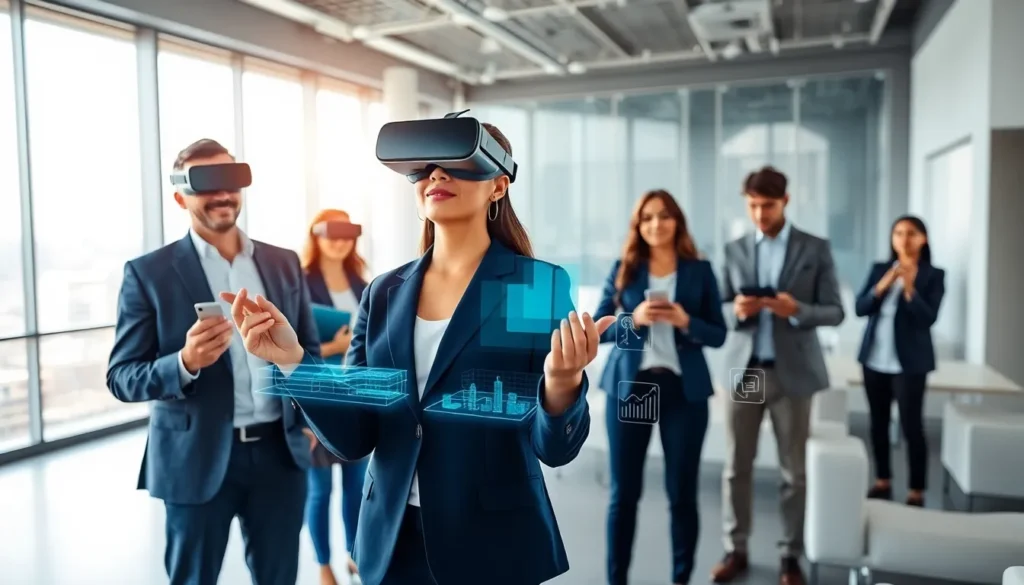
Virtual meetings in VR offer something video calls cannot: presence. Participants feel like they share a room. Body language becomes visible through avatar movements. Spatial audio lets people have side conversations naturally. Companies like Meta, Microsoft, and smaller startups compete to build the best virtual meeting spaces.
Product design and prototyping benefit enormously from VR. Engineers can examine virtual products at full scale before manufacturing. Automotive companies walk around virtual car designs. Furniture makers test ergonomics. This process catches problems early and reduces expensive physical prototype iterations.
Real estate and architecture firms use virtual reality to sell unbuilt spaces. Clients can tour apartments before construction finishes. Architects can identify design problems by experiencing spaces rather than just viewing plans. This application of virtual reality ideas saves time and improves client satisfaction.
Retail businesses experiment with virtual showrooms. Customers try on virtual clothes, arrange virtual furniture in their homes, or test products before purchasing. IKEA’s Place app pioneered augmented reality furniture placement. Full VR showrooms take this concept further.
Employee onboarding through virtual reality creates memorable first days. New hires tour virtual offices, meet avatar versions of colleagues, and learn company culture through interactive experiences. This approach works especially well for distributed companies without physical headquarters.
Virtual reality ideas for trade shows and conferences offer cost savings. Companies can showcase products to global audiences without shipping equipment worldwide. Attendees can interact with demonstrations remotely. The pandemic forced rapid adoption of these solutions, and many have proven their value beyond emergency circumstances.
Creative and Artistic Expression
Artists have embraced virtual reality as both a medium and a tool. The technology enables creative work impossible in physical space.
VR painting applications like Tilt Brush and Quill let artists create three-dimensional works. Painters can walk through their creations, add strokes from any angle, and build sculptures of light. Museums have exhibited VR artworks, and some pieces sell for significant sums at auction.
Music production in virtual reality offers new interfaces for composition. Instead of clicking on screens, producers can grab and manipulate virtual sound waves. Spatial audio mixing becomes intuitive when engineers can physically place sounds in 3D space around them.
Architectural visualization has transformed through virtual reality ideas. Designers can sketch buildings in VR, walk clients through spaces, and iterate designs in real-time during meetings. The feedback loop between concept and revision shortens dramatically.
Filmmakers use VR for previsualization. Directors can block scenes in virtual sets before shooting. Cinematographers can test camera angles. Visual effects teams can plan shots with precise spatial understanding. James Cameron used similar technology for Avatar sequels.
Fashion designers create and showcase virtual clothing. Digital fashion shows present collections to global audiences. Some designers sell purely virtual garments for avatars in games and social platforms. This intersection of virtual reality ideas with fashion creates new markets entirely.
Dance and performance art find new expression in VR. Choreographers can design pieces that incorporate impossible physics. Performers can share stages with virtual elements or perform for audiences distributed worldwide. The boundaries between performer and viewer blur in ways physical stages cannot achieve.


